Continuity.

Not as reminders. As infrastructure.

The first failure is not that a conversation ends. It is the absence of a layer that knows what should happen after it.

Discuss the follow-through layer ->

The misread

Most teams diagnose follow-through failure as a discipline problem.

Sometimes the answer is better discipline. Usually the gap is earlier: no layer owns what should happen after the signal is already known.

Good teams can still let confirmations, reminders, stale inquiries, and returning customers depend on individual memory.

The question is not whether messages can be sent. It is whether the operation knows when they should happen.

Follow-through surfaces

Confirmation, recovery, and lifecycle are follow-through. The inbound layer receives demand. This layer keeps the next step from depending on memory after demand has already entered the business.

Three surfaces belong in the follow-through layer.

Commitments become real through before uncertainty reopens.Dropped momentum is caught by before silence becomes normal.Relationships keep moving through before memory has to do the work.

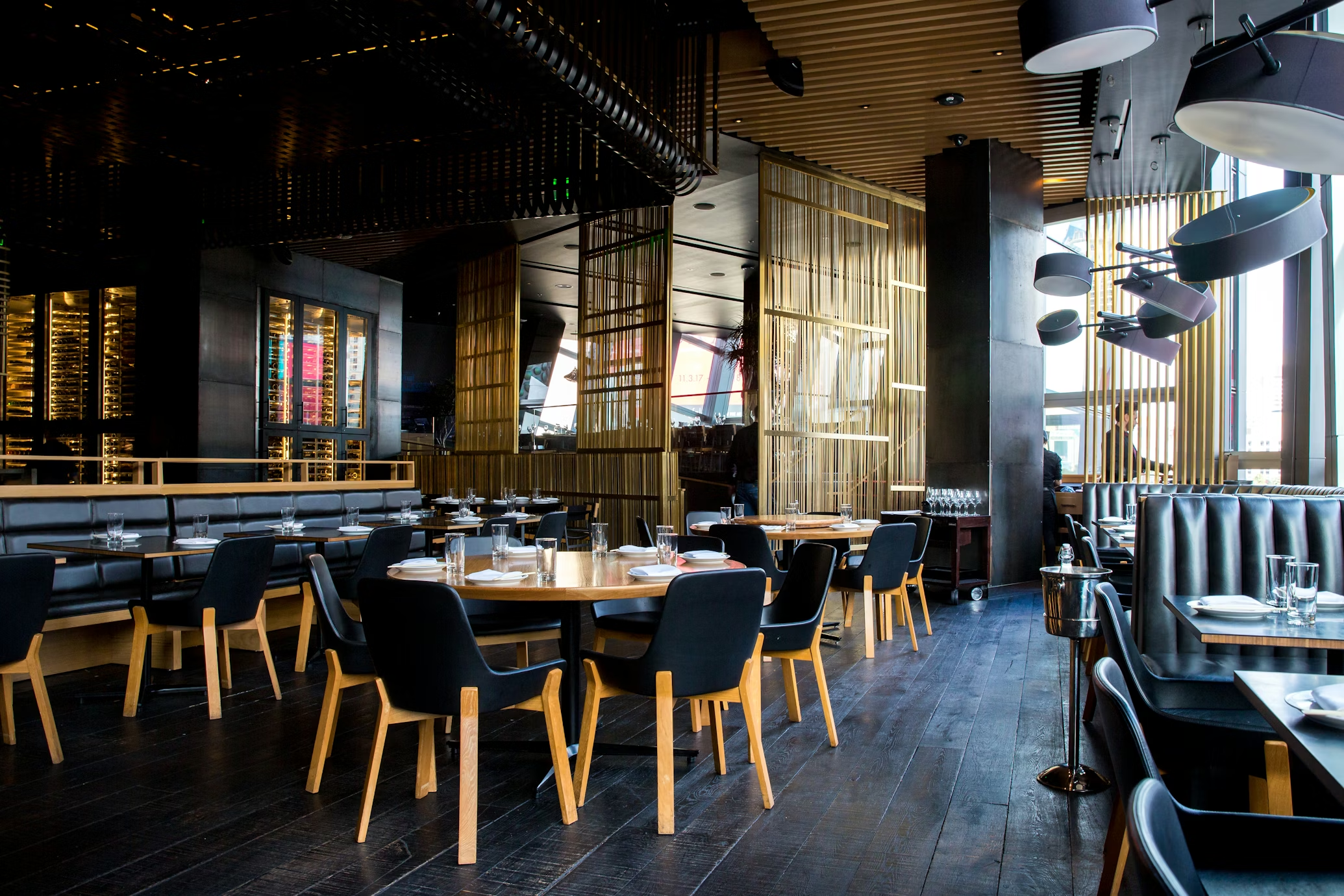
Restaurant team preparing reservation and event details

01

Confirmation

Confirmation

A booking is not secure because someone said yes. It is secure when timing, expectations, and the next instruction no longer depend on memory.

Appointments, reservations, events, and commitments stay held together after capture.

Appointment reminders / Reservation confirmations / Event confirmations / Pre-visit instructions / Calendar holds / No-show reduction

Follow-up work across patient or client records

02

Recovery

Recovery

Silence is usually treated as the end of the thread. Often it is only the point where the operation stopped knowing what should happen next.

Missed calls, stale inquiries, and unconfirmed bookings get a controlled path back.

Missed-call recovery / Abandoned inquiry follow-up / Unconfirmed booking recovery / Stale lead movement / No-response sequences / Win-back logic

Guest retention and repeat-visit planning work

03

Lifecycle

Lifecycle

The relationship does not end when the transaction is complete. It ends when the business has no structured reason to return at the right moment.

Post-visit, reactivation, occasion-based, and repeat-contact flows keep the relationship moving.

Post-visit follow-up / Repeat-visit movement / Reactivation / Occasion-based messaging / Soft-night outreach / Segment-aware sequences

Continuation path

The next step has to survive the first interaction.

A confirmation, reminder, recovery sequence, or lifecycle message is not useful because it can be sent. It is useful when the operation knows why it should happen and when it should stop.

The follow-through layer exists to keep the next step alive without turning people into the system of memory.

The useful moment is not the reminder. It is the point before the reminder, when the system already knows what is owed, why it matters, and what outcome should close the loop.

Follow-through becomes serious when the next step is no longer a note, a private habit, or a favor someone remembers to do.

Conversion point

A commitment enters.
A sequence leaves.

Sequence before reminder

Before the message goes out, the next step already has a reason.

Trigger set. Timing known. Channel chosen. Context attached. Outcome waiting.

What changes

Staff stop being the memory layer. They enter when judgment changes the path, not because the next step was forgotten.

Operating logic

The first job is not to chase.
It is to keep the next step alive.

Recognize

01

Recognize

The system knows which commitment, silence, elapsed time, or relationship moment should trigger follow-through.

Booking / appointment / unconfirmed request / stale lead

Sequence

02

Sequence

Timing, channel, message, and escalation are set before the team has to remember the case.

Reminder / confirmation / recovery / reactivation

Deliver

03

Deliver

The next message goes out with context, without turning staff into a calendar or a memory layer.

SMS / email / WhatsApp-ready / internal alert

Resolve

04

Resolve

The outcome is captured so follow-through stops, moves, or escalates when the situation changes.

Confirmed / rescheduled / declined / escalated / closed

Boundary

Not pressure. Continuity.

Separate the sequence from the judgment.

Follow-through should keep the work moving. It should not decide what deserves human attention, change the relationship tone, or pressure a client when judgment is required.

People still decide what matters. The system keeps the next step from disappearing before they get there.

The layer carries

Sequence

Trigger, timing, channel, context, and close condition are made legible before the next step moves.

The people carry

Judgment

Exceptions, relationship nuance, commercial judgment, and final ownership remain with the people who understand the operation.

Follow-through becomes controlled when continuity is designed before attention is requested.

Selection

Leave alone / simplify / build

Start where the operation keeps asking what happened next.

Not every follow-through problem deserves a system. Some next steps should stay human, some should stay simple, and some are too low consequence to deserve architecture.

The work becomes serious when the same confirmation, recovery, or relationship moment keeps depending on someone remembering at the right time.

We take follow-through work seriously when the cost of silence is larger than the cost of designing the layer properly.

Leave alone

01

Already owned.

If the next step is low consequence, clearly owned, and rarely forgotten, the system does not need to interfere.

Simplify

02

Known timing.

If the follow-through is obvious but repetitive, the work should become a light sequence instead of a recurring reminder.

Build

03

Costly silence.

If missed follow-through changes revenue, attendance, retention, or client trust, the layer deserves to be designed properly.

If you are already thinking about the place where the next step usually gets forgotten, that is enough to start the conversation.